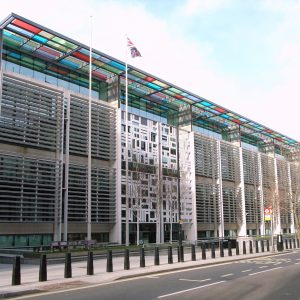
Marsham Street (The Home Office), Westminster, London
Restoring Control / Reducing Net Migration
The government has repeatedly framed the reforms as necessary to “restore order” to a system it says is broken, or at least badly strained. Net migration has been rising sharply, and the government claims many prior rules weakened the UK’s ability to control who comes in, under what conditions, and what path to settlement they have. (GOV.UK)
Making Migration More Selective / Skills-Led A big theme is shifting more toward highly skilled immigration. That means raising the thresholds for what counts as a “Skilled Worker” visa, tightening salary levels, and reducing or removing lower or medium skill routes unless there is a strong shortage or other compelling reason. (House of Commons Library)
Reducing Reliance on Overseas Workers in Some Sectors Particularly for sectors like social care, the government is moving to end or significantly limit overseas recruitment. Part of the justification is that UK labour markets / schools / training systems should produce more of the needed workers domestically. (House of Commons Library)
Tougher Requirements for Settlement / Pathways to Permanence The government is proposing longer qualifying periods before someone can settle (sometimes raising the period to 10 years in many cases), stricter English language tests, good character requirements, and contributions to UK society (work, etc.). The aim is to ensure those who settle have demonstrated more commitment/contribution. (BBC)
Employer Accountability and Sector-Workforce Planning The government says it wants sectors that are particularly dependent on foreign labour to develop workforce strategies: training, upskilling, recruiting locally. Employers who heavily rely on overseas labour will face tighter sponsorship rules, and some roles will no longer qualify unless there’s an evidence-based need. (House of Commons Library)
Cracking Down on Abuse / Undocumented / Irregular Migration Another part of the narrative is that the existing system allows or is vulnerable to abuse: visa misuse, exploitation of migrants, employers breaking rules, etc. The government emphasizes stronger enforcement (returns, removals, scrutiny of applications) and border security. (GOV.UK)
What the Government Admits Is Still Unsettled or Needs Further Detail
Many of the proposals are still just that proposals, not laws yet. The White Paper lays out intended reforms, but not all have a firm timetable or the detailed implementation plan. (House of Commons Library)
Lunar HouseIt is not yet clear how some of the changes will apply to everyone especially those already in the UK under existing visa or settlement routes. Whether transitional arrangements will apply (and if so, how) is something the government acknowledges will need consultation. (Reddit)
Changes to English language requirements, family visa rules, and settlement (“indefinite leave to remain”) standards are being developed, but in some cases there are no fixed dates yet for when these will take effect. (House of Commons Library)
Government’s Messaging / Framing
The reform is often described in moral and political terms: fairness, “genuine contribution”, not letting people exploit loopholes, ensuring migrants contribute rather than just receiving.
There is a strong emphasis on the link between immigration policy and domestic skills training the government argues that instead of relying on bringing in people from abroad, more effort should go into upskilling UK residents and making sure sectors can supply their own labour demands.
“Restoring order,” “controlled” migration, and “fair system” are repeated phrases. The government is conscious of the political dimension: it presents this as responding to public concern about migration levels, and competition from parties that criticise major immigration. (GOV.UK)




Add a Comment